
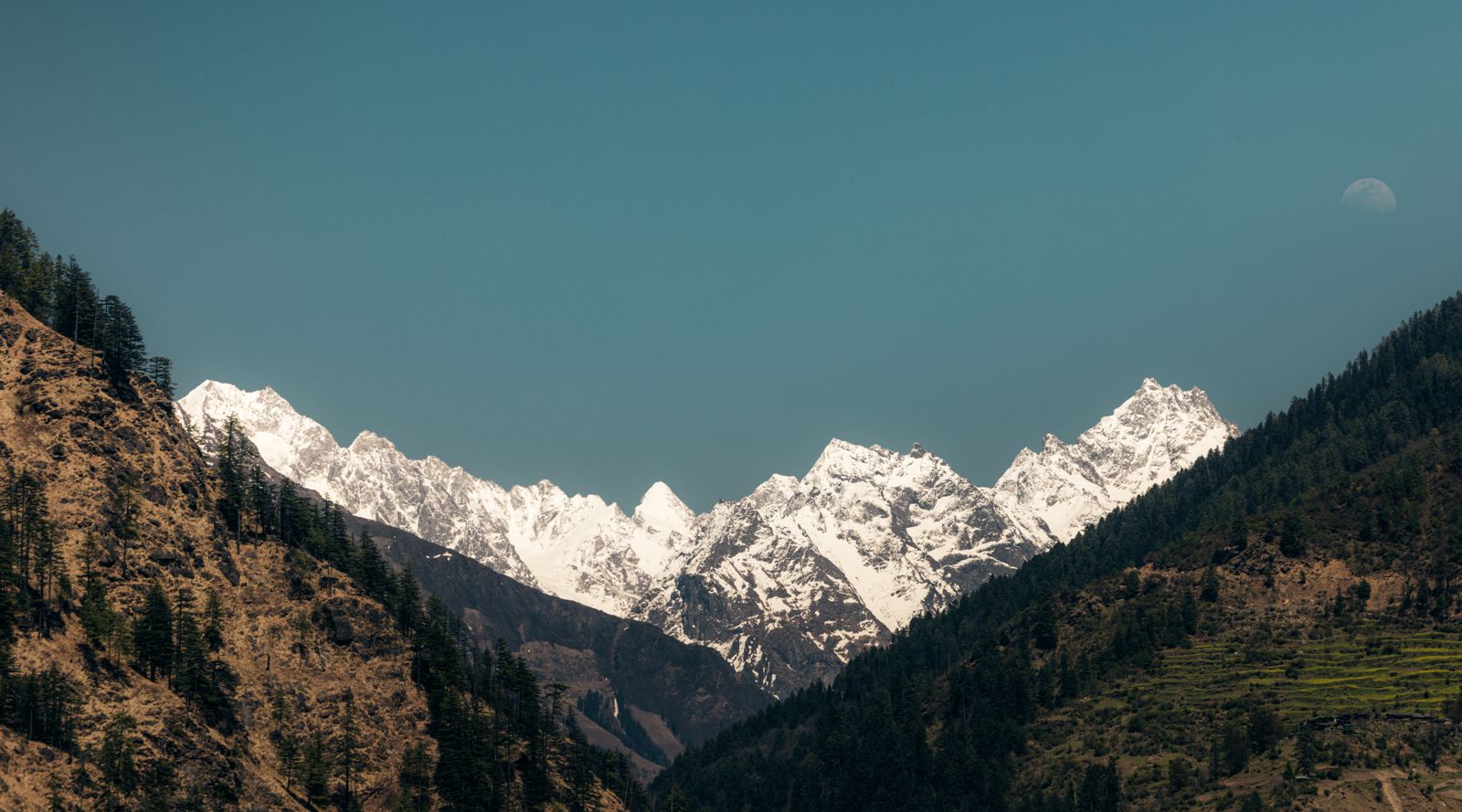
Mera Peak Expedition
A 6,476 m summit above the Hinku Valley
Mera Peak Expedition, Nepal (6,476 m)
Mera Peak rises to 6,476 metres and is one of Nepal’s best-known trekking peaks. It is a good introduction to high-altitude mountaineering, combining remote trekking, glacier travel and a hard summit climb.
The expedition starts in Kathmandu, with a drive to Ramechhap and a flight to Lukla, the gateway to the Everest region. From Lukla the trail crosses Zatrawala Pass into the Hinku Valley, past traditional settlements and through rhododendron forest.
Higher up, the ground turns to rocky trails, snowfields and glaciers. At Khare you spend time acclimatising and learning climbing techniques from experienced mountaineering professionals before moving up to Mera High Camp.
The summit push needs endurance, determination and the ability to cope with extreme altitude. Mera Peak suits fit trekkers with previous high-altitude trekking experience who want to take the next step.
- Expedition Name
- Mera Peak Expedition
- Duration
- 14 Days
- Adventure
- Mountaineering
- Base Camp
- Kathmandu
- Country
- Nepal
- Location
- Khumbu Region, Nepal
- Maximum Altitude
- 6,476 m / 21,247 ft
- Difficulty
- Challenging
- Best Season
- Spring and autumn
- Best Months
- April, May, October, November
- Trail Type
- Point-to-point / Circular return route
- Total Trek Distance
- Approx. 96 km
- Food
- Vegetarian meals and eggs
- Accommodation
- Hotels, teahouses and tents
- Nearest Airport
- Tribhuvan International Airport, Kathmandu
- Railway
- No railway connectivity to Kathmandu
What to expect
Mera Peak combines remote Himalayan trekking with high-altitude mountaineering. Expect long walking days, steep climbs, changing weather and harder ground as you go higher.
The lower trail goes through forest, along rivers and past mountain villages. Higher up it opens into rocky ground, snowfields and glaciers.
Mera Peak is generally considered a trekking peak rather than a highly technical climb. You still need good physical fitness, previous high-altitude trekking experience and familiarity with basic mountaineering techniques.
Before the summit attempt you are shown how to use crampons, ice axes, harnesses and ropes. Acclimatise properly, keep a steady pace and follow the expedition leader’s instructions throughout.
On summit day you climb over glacier terrain to the summit at 6,476 metres, with views across the highest mountains in the world.
Why you'll love it
Five 8,000-metre peaks
From the summit you can see Everest, Lhotse, Makalu, Cho Oyu and Kangchenjunga.
The flight to Lukla
The flight from Ramechhap to Lukla gives you aerial views of the Himalaya.
The Hinku Valley
A remote valley away from Nepal’s busier trekking routes, with forest, river valleys, alpine meadows and Sherpa villages and monasteries.
Zatrawala Pass
An early high crossing at approximately 4,550 metres, with wide mountain views.
Glacier training at Khare
Acclimatise, learn mountaineering techniques and get used to crampons, harnesses, ropes and ice axes.
Mera High Camp
A night high in the mountains, among snow peaks, before the summit attempt.
Sunrise from the summit
On summit day you can watch first light reach the big Himalayan peaks from 6,476 metres.
Eligibility
Mera Peak is a challenging high-altitude mountaineering expedition. You must meet these requirements:
Minimum age: 18 years.
Trekking experience: at least two previous high-altitude treks between 4,000 and 5,000 metres.
Physical fitness: good cardiovascular endurance, stamina and overall fitness.
Mental preparation: able to handle long trekking days, cold and hard mountain conditions.
Mountaineering readiness: willing to learn and follow basic climbing techniques and safety instructions.
Previous technical mountaineering experience helps, but you must be comfortable with hard physical activity at high altitude.
Pick-up information
All participants must arrive in Kathmandu by 1:00 PM on Day 1.
After your booking is confirmed, your trek coordinator will send you the hotel name, address and contact details.
Airport pick-up and transfers are arranged as per the expedition itinerary.
Packing list
The right equipment keeps you safe and comfortable at high altitude. Bring suitable clothing, personal gear and mountaineering equipment for changing mountain conditions.
Backpack: 50–60 L backpack with rain cover.
Daypack: 20–30 L daypack with rain cover (if you opt for offloading).
Walking gear: trekking poles (at least one recommended).
Water: two 1-litre water bottles, or a hydration pack and one bottle.
Hot water: one thermos flask.
Food and snacks: small lunch box, energy bars, dry fruits and ORS/electrolytes.
Medical: personal medical kit (consult your doctor before packing).
Clothing and mountaineering gear:
Thermal base layers.
Fleece and insulating mid-layers.
Down jacket suitable for extreme cold.
Waterproof and windproof outer layers.
Trekking trousers and warm innerwear.
Insulated gloves and liner gloves.
Woollen socks and spare pairs.
Warm cap, balaclava and sun hat.
UV-protection sunglasses and sunscreen.
High-altitude mountaineering boots.
Gaiters.
Headlamp with spare batteries.
Crampons, ice axe, harness and climbing helmet, as required.
Confirm technical climbing equipment availability and rental with the expedition team before departure.
Day by day
Day 1Arrive in Kathmandu
Arrive in Kathmandu, at about 1,300 metres. Meet the expedition team, finish your preparations and settle into your hotel.
Day 2Kathmandu → Ramechhap → Lukla
Leave early by road for Ramechhap, then fly to Lukla. On arrival, meet the local trekking crew and get ready for the trek.
Day 3Lukla → Chhuthang
Leave Lukla on forest trails. The route goes through quiet woodland and starts the climb towards higher ground.
Day 4Chhuthang → Zatrawala Pass → Tuli Kharka
A steep climb to Zatrawala Pass, one of the first hard sections of the expedition. From the pass there are wide views of the surrounding peaks. Then descend to Tuli Kharka.
Day 5Tuli Kharka → Kothe
Descend on forest trails into the Hinku Valley to Kothe, a small settlement surrounded by wild country.
Day 6Kothe → Thangnak
Continue up the Hinku Valley along the river. The country gets rougher as you climb, with views of the peaks and glaciers around you.
Day 7Thangnak → Khare
Walk over rocky ground to Khare, the main staging point for the Mera Peak climb. The country becomes more alpine as you get closer to the high mountains.
Day 8Acclimatisation and climbing training at Khare
Rest and acclimatise. The expedition team checks the climbing equipment and runs training on crampons, ice axes, harnesses and ropes.
You also learn basic glacier travel and rope techniques for the summit attempt.
Technical climbing equipment is not included in the expedition cost. Rental is approximately ₹6,000–₹6,500, subject to availability and rates.
Day 9Khare → Mera High Camp
Climb to Mera High Camp over snow and glacier sections. The climb is physically demanding, and the team keeps a steady pace so everyone reaches high camp safely.
Day 10Mera Peak summit → Khare
Summit day starts early, often before sunrise. Cross glacier terrain with your mountaineering team to the summit of Mera Peak at 6,476 metres.
From the top you can see Everest, Lhotse, Makalu, Cho Oyu and Kangchenjunga. Then descend carefully to Khare.
Day 11Khare → Kothe
Descend through the Hinku Valley on trails you already know. The lower altitude makes the walking easier.
Day 12Kothe → Tuli Kharka
Walk back through the Hinku Valley, climbing gradually to Tuli Kharka through forest and open mountain country.
Day 13Tuli Kharka → Zatrawala Pass → Lukla
Cross Zatrawala Pass again, then descend to Lukla for a last evening with the expedition team.
Day 14Lukla → Ramechhap → Kathmandu
Fly from Lukla to Ramechhap, then drive to Kathmandu. The expedition ends when you reach Kathmandu.
What's included
Included
- Hotel accommodation in Kathmandu with breakfast on Day 1 and Day 15
- Teahouse and tent accommodation during the expedition, as per the itinerary
- Meals (vegetarian and eggs) from Day 2 lunch to Day 15 breakfast
- Meals during the trekking and climbing sections, from Lukla to Lukla
- Experienced base camp manager for coordination and emergency support
- Mountaineering and first-aid qualified expedition leader
- Experienced local mountain guides, depending on group size
- Required support staff throughout the expedition
- Sleeping bags and sleeping liners, if required
- Sleeping mattresses
- Three-person all-season trekking tents on twin-sharing basis
- Kitchen and dining tents
- Toilet tents
- Common cooking utensils and camping equipment
- Medical and safety equipment: first-aid kit, stretcher, oxygen cylinder, blood pressure monitor, pulse oximeter and stethoscope
- Cloakroom facility at base camp
- Mules/porters for central expedition luggage
- Mule or porter support for personal luggage, as per the opted facility
- All necessary permits and entry fees, up to the applicable Indian citizen fee
- Expedition services from Kathmandu to Kathmandu
- Expedition completion certificate
- Complimentary trekking kit bag or duffel bag when you opt for porter service
Not included
- International flights to and from Kathmandu
- Nepal visa fees
- Personal travel and mountaineering insurance, including high-altitude evacuation cover
- Personal expenses such as laundry, telephone calls, Wi-Fi and charging
- Additional meals, snacks and drinks outside the included meal plan
- Personal climbing equipment and technical gear rentals
- Expenses from additional buffer days, delays or itinerary changes
- Tips for guides, porters and support staff
- Any costs from unforeseen circumstances, natural events or emergency evacuation
- Anything not specifically mentioned under inclusions
Buffer days and flights
The itinerary depends on weather, flight operations and the group’s pace.
Flights to and from Lukla depend heavily on the weather and may be delayed or cancelled. We strongly recommend keeping 3–4 extra buffer days in your travel plans.
These days are not part of the 14-day itinerary and may cost extra for accommodation, meals, transport and guide services.
If you don’t need the buffer days, you can use the time to explore Kathmandu.
Best time to climb Mera Peak
Spring and autumn are the best seasons for Mera Peak.
The monsoon (June to September) usually brings heavy rain, cloud and unreliable flights. Winter brings extreme cold and harder conditions higher up.
Conditions vary every year, and summit attempts always depend on weather and mountain conditions.
Planning to climb Mera Peak?
Contact The Nest, Sankri to discuss expedition dates, eligibility, preparation and availability.
Book your expeditionYou might also like
 Expedition
Black Peak Expedition
A 6,387 m climb above the Har Ki Dun valley
 Expedition
Dhumdhar Kandi Pass Trek
A 5,490 m pass from the Tons to the Bhagirathi valley
 Expedition
Mt. UT Kangri Peak Expedition
A first 6,000-metre summit in Ladakh