
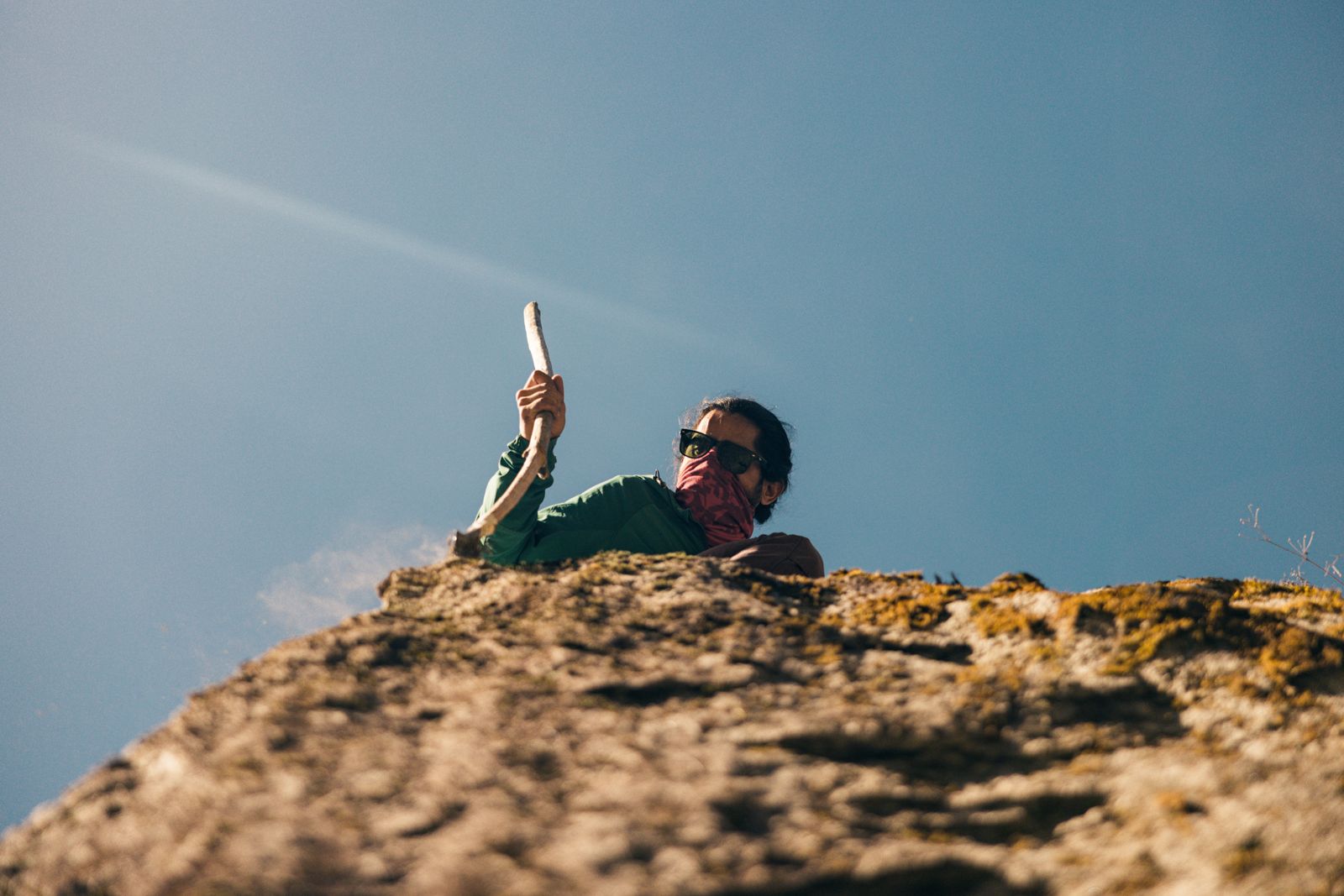
Black Peak Expedition
A 6,387 m climb above the Har Ki Dun valley
Black Peak Expedition (6,387 m)
Black Peak, known locally as Kalanag, rises above the Bandarpoonch Massif and is one of the most sought-after climbs in the Garhwal Himalayas. Its summit looks like the raised hood of a black cobra, which is where the local name comes from.
This 15-day expedition goes deep into the remote Har Ki Dun valley, through dense forest, past glacial lakes and across moraine fields to the high camps. The ground gets harder as you go up, and the climb to the summit will test your mountaineering skills, endurance and decision-making.
Groups are small. The plan includes acclimatization and contingency days to make the climb safer.
- Peak
- Black Peak (Kalanag)
- Altitude
- 6,387 m / 20,955 ft
- Location
- Bandarpoonch Massif, Garhwal Himalayas, Uttarakhand
- Duration
- 15 days
- Starting Point
- Sankri, Uttarakhand
- Route
- Sankri – Har Ki Dun Valley – Kyarkoti Base Camp – High Camps – Summit
- Difficulty
- Very Difficult / Technical Mountaineering
- Expedition Type
- High-altitude mountaineering
- Group Size
- Small batch
- Best Season
- Typically May–June and October, subject to mountain conditions
- Nearest Major Access Hub
- Dehradun
Why you'll love it
A 6,000er in the Garhwal Himalayas
At 6,387 metres, Black Peak is a serious high-altitude climb for experienced mountaineers who want to move on from trekking and build their expedition skills.
Kalanag
The local name comes from the peak’s dark summit, shaped like a cobra’s hood, which stands out in the Bandarpoonch range.
Through the Har Ki Dun valley
The approach goes up the Har Ki Dun valley, past traditional villages, dense forest and the Supin River.
Changing terrain
You move from forest trails and riverside camps to glacial lakes, moraine fields, snow slopes and high camps.
Small groups
With a small group, the team can coordinate closely and give each climber more attention.
A test of skill and judgement
Acclimatization, load ferries, moving between high camps and planning the summit day will test your physical endurance, technical ability and mountain judgement.
What you will do
Attempt the summit of Black Peak (6,387 m).
Walk through the remote Har Ki Dun valley.
Camp beside the glacial lake of Ruinsara Tal.
Set up a high-altitude base at Kyarkoti.
Move up through Dharo Ki Odari, Arjun Jhadh and Summit Camp.
Build on your mountaineering experience under the guidance of an expedition team.
Have planned acclimatization, rest and contingency days built in.
Who this expedition is for
Black Peak is a very difficult, high-altitude mountaineering expedition. It is for physically fit participants with relevant prior mountaineering experience. It is not for beginners looking for their first Himalayan trek.
Participants should be prepared for:
Prolonged physical exertion and sustained activity at high altitude.
Cold temperatures, changing weather and remote camping conditions.
Snow, ice, steep slopes and potentially technical climbing sections.
Carrying personal and expedition equipment as required.
Following rope systems, safety protocols and the expedition leader’s instructions.
Adjusting plans or turning back if conditions become unsafe.
Day by day
Day 1Arrive in Sankri
Arrive in Sankri, the mountain village where the expedition starts. Meet the team and settle into your accommodation. The day is for a first briefing, equipment checks and final preparations.
Day 2Drive to Gangahad – Trek to Chilurghad (2.5 km)
Drive from Sankri to Gangahad and start the walk to Chilurghad. It is an easy first day through forest as you enter the Har Ki Dun valley.
Day 3Chilurghad to Rainbasera (8 km)
Continue along the Supin River, further into the valley, on forest trails past waterfalls and mountain views. Keep a steady pace and save energy for the higher sections.
Day 4Rainbasera to Ruinsara Tal (8 km)
Trek to Ruinsara Tal, a glacial lake among rough Himalayan terrain. With the peaks around it and the quiet alpine meadows, it is one of the more memorable stages of the approach.
Day 5Ruinsara Tal to Kyarkoti Base Camp (6.5 km)
Leave the lake and continue to Kyarkoti Base Camp. The trail gets harder as it opens into moraine fields and high mountain terrain. Once at camp, settle in and get ready to switch to expedition mode.
Day 6Kyarkoti Base Camp – Acclimatization / Load Ferry
A day for acclimatization and preparation. Depending on conditions and the expedition leader’s plan, the team may carry a load to a higher camp. Go over equipment, climbing systems and camp procedures before moving into harder terrain.
Day 7Kyarkoti Base Camp to Camp 1 – Dharo Ki Odari (approx. 4.5 km)
Start the climb to Camp 1 at Dharo Ki Odari. The ground gets rougher and the views of the surrounding mountains open up. The team’s pace, acclimatization and the conditions on the day decide how fast you move.
Day 8Camp 1 to Camp 2 – Arjun Jhadh (approx. 2.5 km)
Climb to Camp 2 at Arjun Jhadh. The terrain calls for careful footwork, managing your energy and close attention to the expedition leader’s instructions. The focus is on setting up camp, drinking enough water, recovering and preparing for the summit phase.
Day 9Rest / Contingency Day
A planned reserve day for recovery, acclimatization or weather delays. The expedition leader will check the team’s condition and the mountain forecast before deciding on the next move.
Day 10Move to Summit Camp (approx. 3 km)
Continue to Summit Camp over more exposed high-altitude ground. This stage sets the team up for the summit attempt. Final equipment checks, route planning and a detailed briefing make sure everyone knows what summit day involves.
Day 11Summit Attempt / Contingency Day
Depending on weather, snow conditions and team readiness, start the summit attempt or keep the day as a weather buffer. A summit push at this altitude needs disciplined pacing, technical competence and strict adherence to the expedition leader’s decisions.
Day 12Summit Attempt / Return to Base Camp
Make another summit attempt if conditions and the expedition plan allow. Reaching the summit depends on weather, route conditions, individual health and the team’s safety assessment; it cannot be guaranteed. After the attempt, descend carefully to the designated lower camp or base camp as conditions permit.
Day 13Base Camp – Recovery / Descent Towards Sankri
Recover after the high-altitude phase or continue descending towards Sankri, depending on the expedition’s progress and prevailing conditions. The team will determine the safest descent schedule based on weather, terrain and the condition of all participants.
Day 14Contingency Day
A final reserve day for weather delays, additional descent time or recovery. If the expedition has progressed according to plan, this day may be used as a buffer before departure.
Day 15Departure from Sankri
The expedition ends in Sankri. Arrange onward transport to suit your travel plans.
What's included
Not included
- Transport between Dehradun and Sankri (both ways)
Important expedition information
Safety comes first. Black Peak is a serious mountaineering objective, and reaching the summit is never guaranteed.
The itinerary is indicative and may change due to weather, acclimatization, route conditions or team health.
Summit attempts are subject to the expedition leader’s assessment and the mountain conditions.
Appropriate permits, insurance, emergency arrangements and equipment must be confirmed before departure.
Participants should disclose relevant medical concerns to the expedition operator and follow the required medical and fitness screening.
A contingency day does not guarantee that weather delays can be accommodated indefinitely.
Best time to climb Black Peak
The main climbing windows are generally pre-monsoon (May–June) and post-monsoon (October), but the actual season depends on snowpack, weather, route conditions and current expedition assessments. Dates should be confirmed with the expedition team before booking.
Planning to climb Black Peak?
A mountain this size needs preparation, patience and respect. The route goes up through Har Ki Dun to the high camps and on to one of the Garhwal Himalayas’ 6,000-metre peaks.
Contact The Nest, Sankri to discuss expedition dates, eligibility, preparation and availability for the next Black Peak expedition.
Book your expeditionYou might also like
 Expedition
Dhumdhar Kandi Pass Trek
A 5,490 m pass from the Tons to the Bhagirathi valley
 Expedition
Mt. UT Kangri Peak Expedition
A first 6,000-metre summit in Ladakh
 Expedition
Dzo Jongo East Expedition
A quiet 6,240 m peak in Ladakh’s Markha Valley