
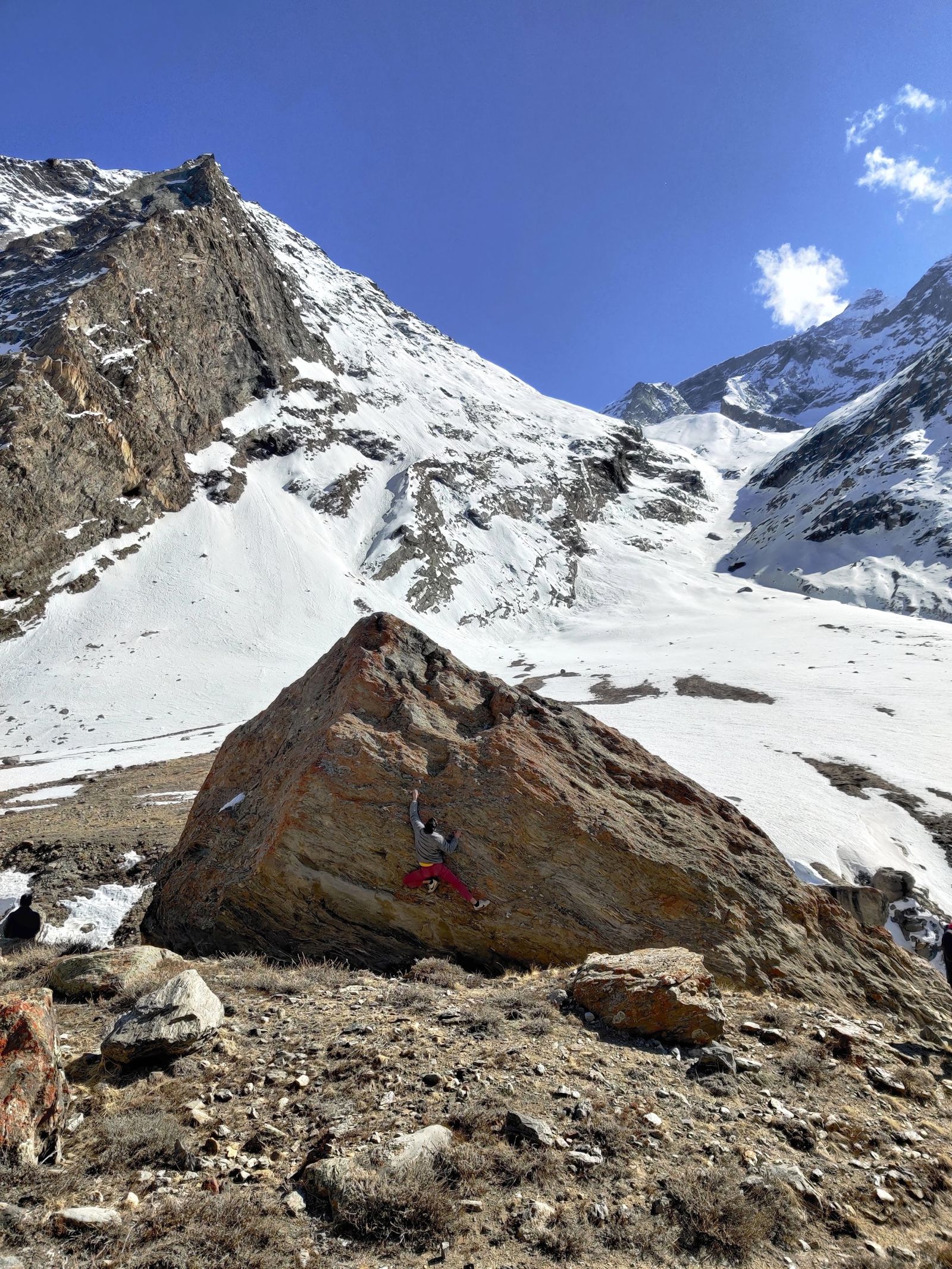
Dzo Jongo East Expedition
A quiet 6,240 m peak in Ladakh’s Markha Valley
Dzo Jongo East Expedition, Ladakh (6,240 m)
Dzo Jongo East rises to 6,240 metres in the Markha Valley region of Ladakh. Its neighbours, Kang Yatse I and II, get more attention, so the climbing routes on Dzo Jongo stay quiet and remote.
The expedition starts in Leh with two days of acclimatisation. From there you travel past small mountain villages, dry river valleys and high campsites, and cross Shiul Pass, Chak Pass and Kongmaru La.
The peak stays out of sight for the first days of the trek. You only see it after crossing Chak Pass and reaching base camp.
At base camp you spend a day acclimatising, checking equipment and practising climbing techniques. Summit day starts around midnight, with steep snow slopes, freezing temperatures and high altitude. It is a good step into high-altitude mountaineering for experienced trekkers.
- Expedition Name
- Dzo Jongo East Expedition
- Duration
- 10 Days
- Adventure
- Mountaineering
- Base Camp
- Leh
- Country
- India
- Location
- Ladakh
- Maximum Altitude
- 6,240 m / 20,472 ft
- Difficulty
- Difficult
- Best Season
- Summer (July–September)
- Trail Type
- Point-to-point / Crossover
- Accommodation
- Guesthouses and camping
- Food
- Vegetarian meals during the trek
- Nearest Airport
- Kushok Bakula Rimpochee Airport, Leh
What to expect
Dzo Jongo East is a demanding high-altitude expedition: remote trekking followed by a hard summit climb.
Acclimatisation in Leh is essential before you go higher. Once you leave the city, the country turns to the dry valleys, rocky mountains and scattered settlements typical of Ladakh.
Expect long trekking days, steep climbs, river crossings and several high passes. The weather changes quickly: strong sun, dry winds, freezing temperatures and occasional snowstorms at the higher camps.
At base camp you receive technical equipment and practise essential climbing techniques, including rope handling and going up and down on mountain terrain.
The summit attempt starts around midnight and crosses steep slopes to the 6,240-metre summit. Altitude, cold and physical effort together make this a serious mountaineering climb.
You need good physical fitness, previous high-altitude experience and the ability to adapt to hard mountain conditions.
Why you'll love it
A quiet 6,000er
Dzo Jongo East is less explored than the peaks around it, so the climb is quieter and more remote.
The Markha Valley
Bare mountains, dry riverbeds, rough valleys, rock formations and traditional mountain settlements.
Three high passes
Cross Shiul Pass (5,100 m), Chak Pass (5,500 m) and Kongmaru La (5,236 m). Each has its own climb and its own views.
First sight of the peak
Dzo Jongo East only comes into view near base camp, after you cross Chak Pass on Day 6.
Kang Yatse I and II
See Dzo Jongo’s better-known neighbours on the way to base camp.
A real climb
Steep slopes, snow and technical mountaineering equipment on the summit push, with support from experienced climbing professionals.
The view from 6,240 m
From the summit you get 360-degree views of the Himalayan and Trans-Himalayan ranges.
Fitness and experience
Dzo Jongo East is a difficult high-altitude climbing expedition. You need good physical fitness, stamina and previous high-altitude trekking experience.
Experience with technical mountaineering equipment helps. Be prepared for long summit days, steep snow slopes and extreme weather.
Day by day
Day 1Arrive in Leh
Arrive in Leh, at about 3,500 metres. The expedition starts at high altitude, so the day is for rest and letting your body adjust.
Day 2Rest and acclimatisation in Leh
A second day to acclimatise in Leh. You can look around the local market and nearby cultural sites, but keep physical activity light.
The expedition team will brief you on the itinerary, mountain safety, environmental responsibilities and what you need to prepare.
Day 3Leh → Lato
Drive from Leh to Lato, one of the older villages in the region. The road follows the Indus Valley past Shey Palace, Thiksey Monastery and Hemis Monastery.
At Lato, settle into the campsite and take a short acclimatisation walk in the evening.
Day 4Lato → Shiul Sumdo
The first trekking day crosses the dry mountain country of Ladakh. Follow the river on a gradual climb, crossing small streams, to the campsite at Shiul Sumdo.
Day 5Shiul Sumdo → Shiul Pass → Chaksung
A longer day. Climb to Shiul Pass at 5,100 metres, with views over the valleys and ranges around you. After the pass, descend to Chaksung for the night.
Day 6Chaksung → Chak Pass → Dzo Jongo East Base Camp
Today you get your first view of Dzo Jongo East after several days on the trail.
Cross Chak Pass at 5,500 metres, then descend to base camp. The ground is steep and hard going, with views of Dzo Jongo East and Kang Yatse I and II.
Day 7Rest, acclimatisation and climbing training
A day to acclimatise at base camp. The team hands out the climbing equipment and runs training sessions on essential mountaineering techniques.
You learn rope handling, ascending and descending, and how to use your climbing equipment safely. The day ends early so you can rest before the summit attempt.
Day 8Summit Dzo Jongo East → Base Camp
The summit attempt starts around midnight. Climb over rocky ground and steep snow slopes, gaining more than 1,000 metres.
Around daybreak, continue to the summit at 6,240 metres, with 360-degree views of the ranges around you.
After some time at the top, start down while the snow is still in good condition. You should be back at base camp around midday, depending on weather and climbing conditions.
Day 9Base Camp → Kongmaru La → Leh
Head back towards Leh over Kongmaru La at 5,236 metres. The route passes Nimaling, with views of Kang Yatse I and II and Dzo Jongo.
Descend on narrow trails, through rocky gorges and across rivers to Chokdo. From there, a vehicle takes you back to Leh.
Day 10Departure from Leh
The expedition ends in Leh.
We recommend keeping extra buffer days after the expedition, as mountain weather and travel conditions can be unpredictable.
What's included
Included
- Guesthouse accommodation in Leh on Day 1, Day 2 and Day 9
- Camping accommodation during the trekking and climbing sections
- Vegetarian meals as per the expedition menu during the trek
- Technical mountaineering equipment: climbing ropes, mountaineering helmets, ice axes, crampons and mountaineering boots
- Camping and trekking equipment: tents, sleeping bags, sleeping mats, gaiters, crampons and microspikes
- Qualified and experienced expedition leader
- Experienced mountain guides
- Required support staff
- First-aid medical kits
- Oxygen cylinder
- Transport from Leh to the trek roadhead and back
Not included
- Meals in Leh
- Meals during road journeys
- Personal expenses
- Outdoor and mountaineering insurance (mandatory)
- Mules or porters for carrying personal luggage
- Expedition permit fee: ₹1,000 per participant for Indian nationals, ₹5,000 per participant for foreign nationals
- Inner Line Permit fee: ₹700 per participant
- Anything not specifically mentioned under inclusions
Important expedition information
Acclimatisation in Leh is essential.
Summit attempts depend on weather and mountain conditions.
You must carry valid outdoor and mountaineering insurance.
We recommend keeping extra buffer days after the expedition.
Porter or mule support for personal luggage is not included.
Best time to climb Dzo Jongo East
Summer, from July to September, is the preferred season for Dzo Jongo East. Ladakh is generally drier then, with clearer skies and better conditions for high-altitude trekking.
The lower valleys are easier to reach, but the higher sections may still have snow and cold winds. Summit weather is unpredictable, so the climbing schedule may change with conditions.
Planning to climb Dzo Jongo East?
Contact The Nest, Sankri to discuss expedition dates, eligibility, preparation and availability.
Book your expeditionYou might also like
 Expedition
Black Peak Expedition
A 6,387 m climb above the Har Ki Dun valley
 Expedition
Dhumdhar Kandi Pass Trek
A 5,490 m pass from the Tons to the Bhagirathi valley
 Expedition
Mt. UT Kangri Peak Expedition
A first 6,000-metre summit in Ladakh